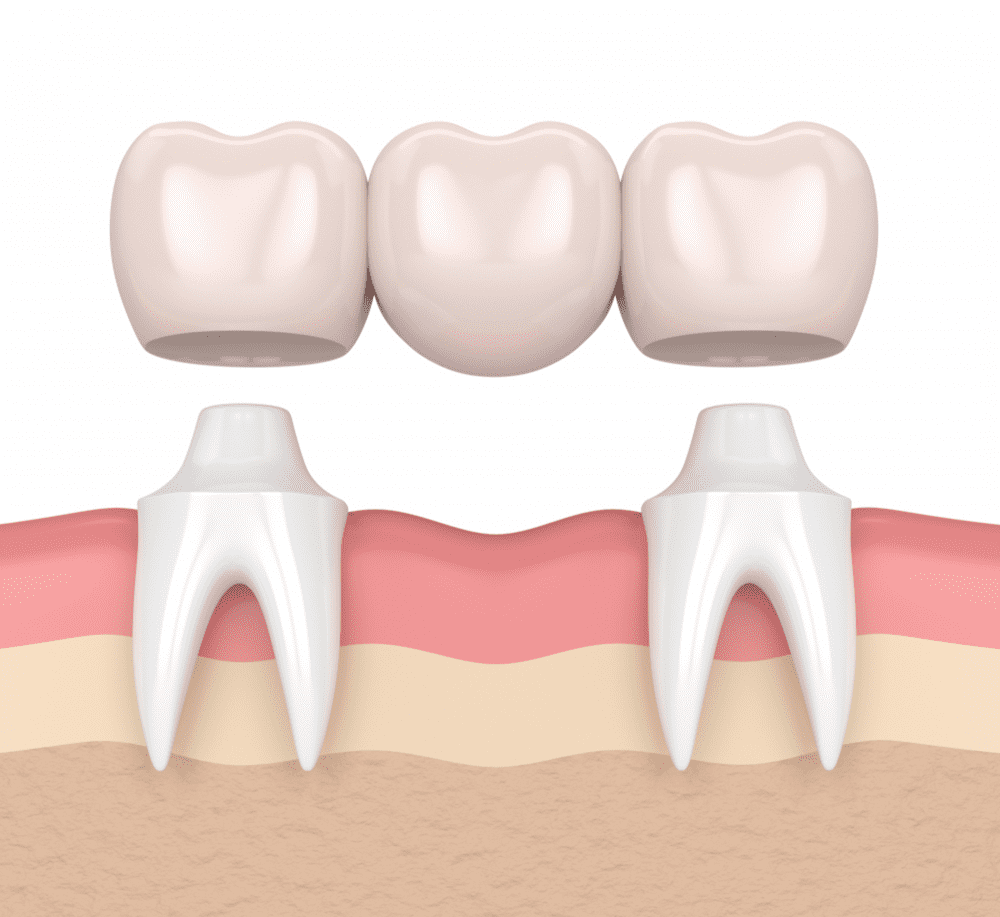
Porcelain dental crowns are an integral part of many dental restorations, including dental implants and dental bridges. Dental crowns can also help fortify a tooth that has received root canal therapy or a large filling, and correct the appearance and function of worn, cracked, or broken teeth.
High-quality porcelain dental crowns have the potential to last for decades with proper care. But what’s the best way to care for your dental crowns? Here are a few steps that will help you take proper care of your crowns for maximum longevity.
Brush and Floss Your Crowns
Yes, although your dental crowns are fabrications of your real teeth, you will still need to brush and floss them [1]! And in cases where a dental crown is covering your actual tooth instead of replacing it (think root canal therapy versus a dental implant), it’s even more important to brush and floss your crowns.
It is possible to get tooth decay under a dental crown if the crown is covering your actual tooth. So brushing and flossing your dental crown will help prevent decay and keep your natural teeth and your restoration healthy and beautiful for as long as possible.
Don’t Misuse Your Teeth
Although dental crowns will be more resistant to staining than your natural teeth, they are still susceptible to damage, such as chips and cracks, that can impact both the durability of your crowns as well as your appearance.
To prevent damage to your porcelain crowns, don’t misuse your teeth. Teeth are meant for chewing, not for chomping on ice, opening packages, or chewing on pencils and pens. Protecting your natural teeth will go a long way towards protecting your dental crowns as well!
Get Treatment for Bruxism
Patients with bruxism have a higher risk of damaging their restorations or experiencing complications from teeth clenching and grinding [2]. So even if you have received dental crowns in the past because you haven’t had a history of bruxism but start experiencing symptoms, it’s essential to get treatment.
Signs and symptoms of bruxism can include headaches, a sore jaw or teeth, teeth sensitivity, and stiff jaw muscles. If you suspect you are grinding your teeth, make an appointment with your dentist to discuss your symptoms and get an exam. Your dentist can tell if you grind your teeth and can help you explore treatment options to protect your smile.
See Your Dentist Regularly
Your dentist will be able to identify problems with your dental crowns before they need to be replaced, so those regular visits to your dentist can not only maximize the lifespan of your crowns, but also save you time and money from a premature crown replacement as well [3].
See your dentist every six months, or at intervals determined by you and your oral healthcare provider, to get professional teeth cleanings and be sure your dental crowns are holding up well. Remember, taking excellent care of your crowns will help them last as long as possible!
Sources:
1. https://my.clevelandclinic.org/health/treatments/10923-dental-crowns
2. https://www.ncbi.nlm.nih.gov/pmc/articles/PMC8836879/
3. https://www.researchgate.net/publication/320129143_An_up_to_50-year_follow-
up_of_crown_and_veneer_survival_in_a_dental_practice