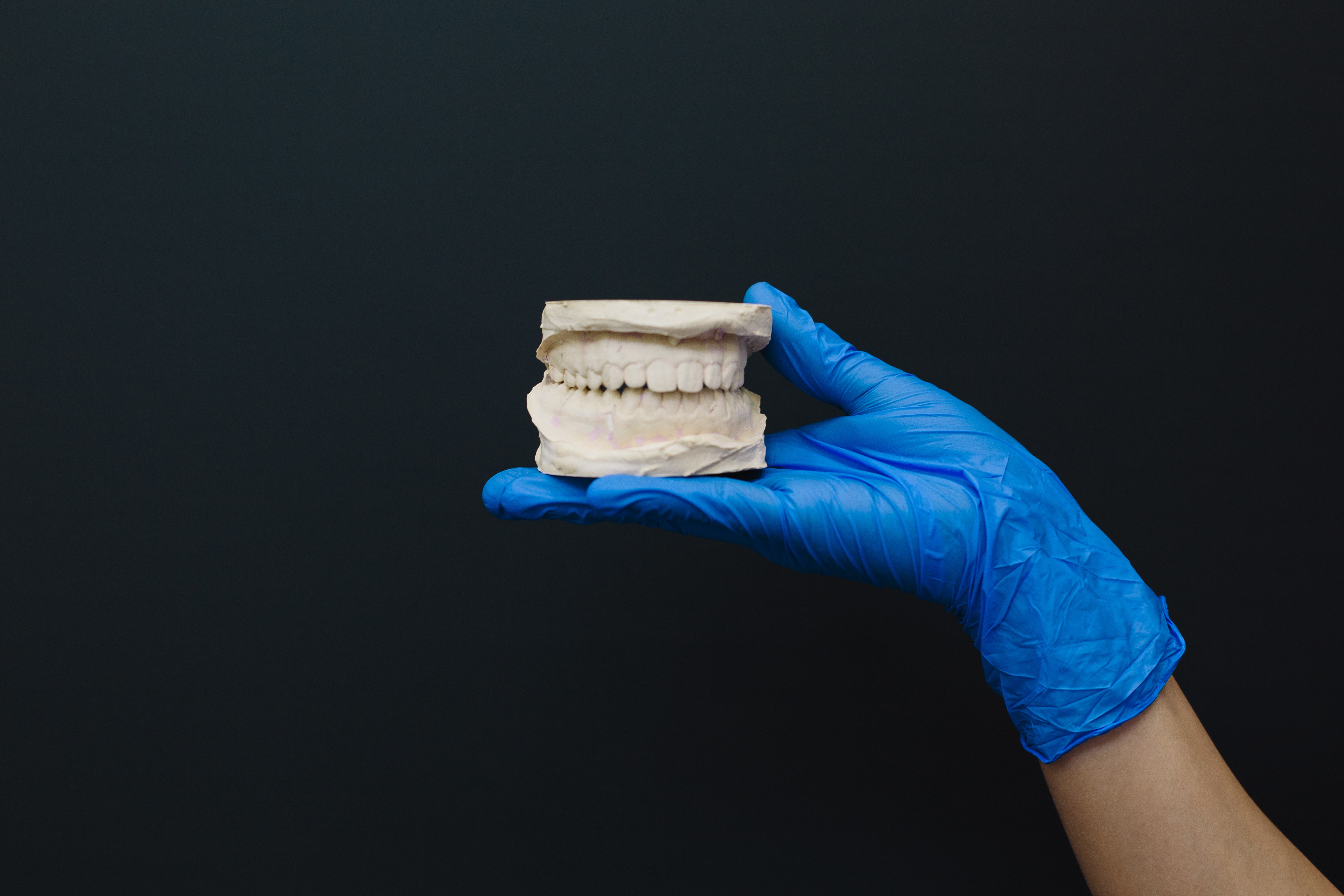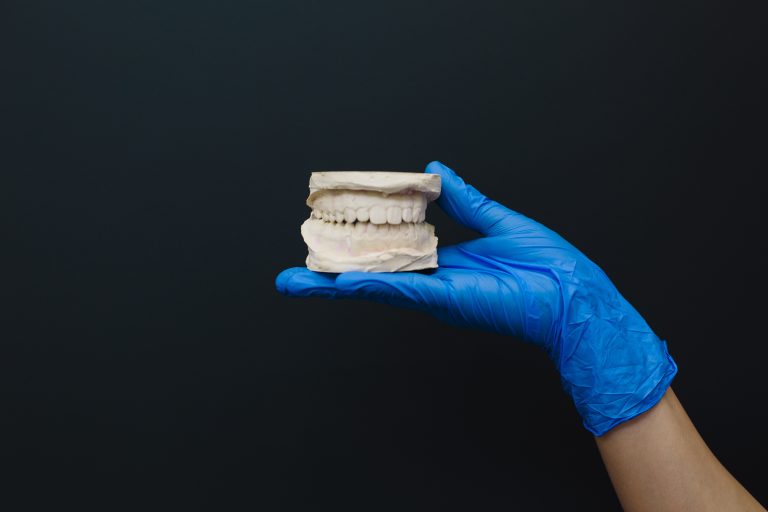
Ideally, we’d have teeth that fit together perfectly and don’t cause problems with crowding, jaw pain, our appearance, or chewing. However, this usually isn’t the case. Over 50% of people have an improper bite, also called malocclusion, that develops in childhood and can cause problems if not corrected [1].
One of these improper bite is called an open bite, where the upper and lower rows of teeth do not touch in one or more areas when the mouth is closed. Open bites have a few causes, including thumb sucking past the age of three, excessive bottle use, and genetics.
There are different kinds of open bites, including posterior and anterior open bites—so what are they and how are they treated?
Anterior Open Bite
An interior bite is when your incisors—your upper and lower front teeth between your canines—do not meet when the jaw is closed.
This is the most common and obvious type of open bite, as when you smile, your front teeth will not touch. So while your molars may fit together normally in the rear of your jaw, your front teeth do not.
Treatment for an anterior open bite will typically include orthodontic treatment or surgery depending on the case. In some cases, both orthodontics and surgery may be used to reposition the jaw and straighten the teeth for a functional and beautiful smile [2].
Posterior Open Bite
A posterior open bite is quite different from an anterior open bite. Where the incisors do not touch in an anterior open bite, the molars do not touch in a posterior open bite. This can lead to trouble chewing and even temporomandibular joint (TMJ) symptoms.
This type of open bite is less common than anterior open bites and treatment may be more complex. While orthodontics may be able to fix a posterior open bite, surgery may also be necessary. In some cases, additional therapies such as onlays may be necessary to achieve full aesthetic and functional benefits [3].
It’s also possible to have both a posterior and anterior open bite where neither the incisors nor molars touch when the jaw is closed.
What Problems Can Open Bites Cause?
Treating an open bite is important because it can cause problems with your jaw joints, including chronic discomfort, facial pain, and even earaches. Open bites also cause problems with speaking, chewing, and your appearance.
Fixing an open bite allows you to have a beautiful and pain-free smile that you can be confident about. Depending on whether you have an anterior open bite, posterior open bite, or both, you may have numerous treatment options to help correct your smile.
You Can Successfully Treat Your Open Bite
Successfully treating an open bite may require orthodontics and treatment from your dentist. If you have a posterior or anterior open bite, you can get the treatment you need to start looking and feeling better. Ask your dentist how!
Sources:
1. https://www.ejpd.eu/pdf/EJPD_2020_21_2_05.pdf
2. https://pubmed.ncbi.nlm.nih.gov/23949448/
3. https://link.springer.com/article/10.1007/BF03262734