You may have noticed that you have different types of teeth in your mouth, some that seem to be better for chewing and others for biting. But what are all these different types of teeth, and what exactly do they do? Find out what each set of teeth is for below!
Incisors
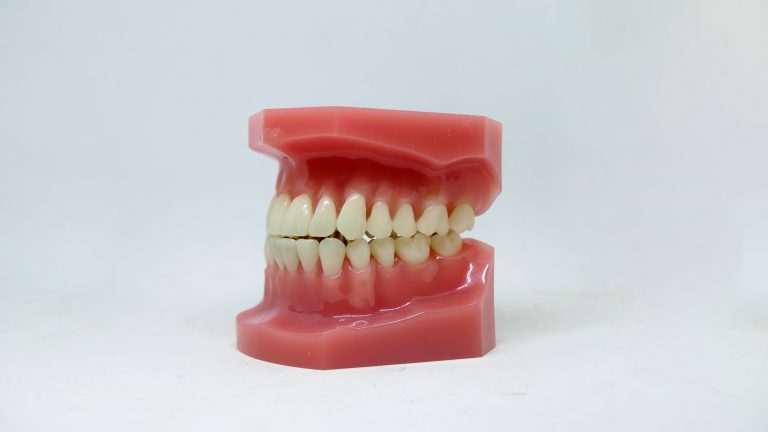
You know incisors as the teeth in the front of your mouth—the four teeth on the top and bottom that are most present when you smile [1].
Incisors are square and are the first teeth to emerge in babies, with the bottom two central incisors coming in first and the lateral incisors (the teeth on either side of the two central ones) coming in next.
These front teeth are made for biting into foods and helping us tear off our food into more bite-sized pieces to make them easier to chew.
Canines
Canines are the teeth that come after incisors and are most easily identified by their sharp points. These teeth are, like incisors, used to help us tear food. However, unlike incisors, canine teeth give you more of an edge to bite and tear food, especially tough foods such as meat or crisp foods such as apples.
Along with incisors, canines tend to be more prone to gum recession, so brushing your teeth gently and flossing every day is a must for protecting these teeth [2].
Premolars
Next come your premolars, just behind the canines on your bottom and lower rows of teeth. Your premolars are also called bicuspids and work together with molars to help chew food. Specifically, premolars are used to help grind up food.
Premolars look similar to molars, but they are much smaller. Children do not have premolars with their primary teeth—instead, these teeth come in with permanent teeth [3]. Adults have eight premolars total, four on the top and four on the bottom.
Molars
Molars are the largest teeth located in the rear of the mouth. These wide teeth have intricate cusps and grooves that help them chew food. Humans have eight molars, not counting their wisdom teeth, with four on the top and four on the bottom.
Since molars have deeper grooves that are more difficult to brush and where food can become trapped, they can be more susceptible to tooth decay than incisors and canines, although all teeth have the potential to develop cavities [4].
Wisdom Teeth (Third Molars)
Wisdom teeth, also called third molars, are the final teeth to appear in the mouth, around the latter teenage or early adult years (age 17-21). Humans have four wisdom teeth total, two on the top and two on the bottom.
Third molars are the largest teeth and are designed, like molars, to help grind and chew food properly. However, as our jaws become smaller and our food becomes easier to chew, wisdom teeth are generally not necessary.
Most people will have an issue with one or more of their wisdom teeth in their lifetime and need to have them removed [5].
How Many Teeth Should You Have?
In total, you should have 32 teeth—eight incisors, four canines, eight premolars, and 12 molars, including your wisdom teeth. All of your teeth serve the purpose of helping you properly bite and chew food so you can easily digest it, but they also help you speak and, of course, smile!
Sources:
1. https://kidshealth.org/en/parents/mouth-teeth.html
2. https://www.ncbi.nlm.nih.gov/pmc/articles/PMC4944726/
3. https://www.medicalnewstoday.com/articles/326754#types-of-teeth
4. https://www.ncbi.nlm.nih.gov/pmc/articles/PMC2897860/
5. https://www.ncbi.nlm.nih.gov/books/NBK279590/