Even if you brush and floss every day, your mouth is full of bacteria (both good and bad) that constantly build up on your teeth. Most people know what plaque and tartar are, but what about biofilm? While these terms are closely related, they aren’t exactly the same. In this blog, we’ll explore how dental plaque, calculus, and biofilm differ and what they do to your teeth and gums so you can take better care of your smile.
What Is Dental Biofilm?
Biofilm is a community of microorganisms, primarily bacteria, that stick together and attach to surfaces inside your mouth. These bacteria produce a protective, sticky coating that helps them survive and multiply.
Biofilm naturally forms on your teeth, gums, tongue, and dental restorations. The first bacteria to attach to clean teeth are usually the “good” kind that form a thin layer of biofilm, which helps protect against temperature changes and associated sensitivities, harsh food chemicals, and everyday wear. These healthy bacteria also compete with harmful, acid-producing bacteria that can contribute to cavities, gum inflammation, and periodontal disease if they accumulate.
What Is Dental Plaque?
Plaque is a soft, sticky type of biofilm that constantly forms on your teeth, especially along your gumline and between teeth. It’s made up of bacteria, saliva components, and other substances.
When you eat sugary or starchy foods, certain plaque bacteria produce acids that attack your tooth enamel and increase your risk of developing cavities. Plaque buildup near your gums can also trigger inflammation, redness, and bleeding, which are early signs of gingivitis. Fortunately, plaque can usually be removed with consistent brushing and flossing.
What Is Dental Calculus?
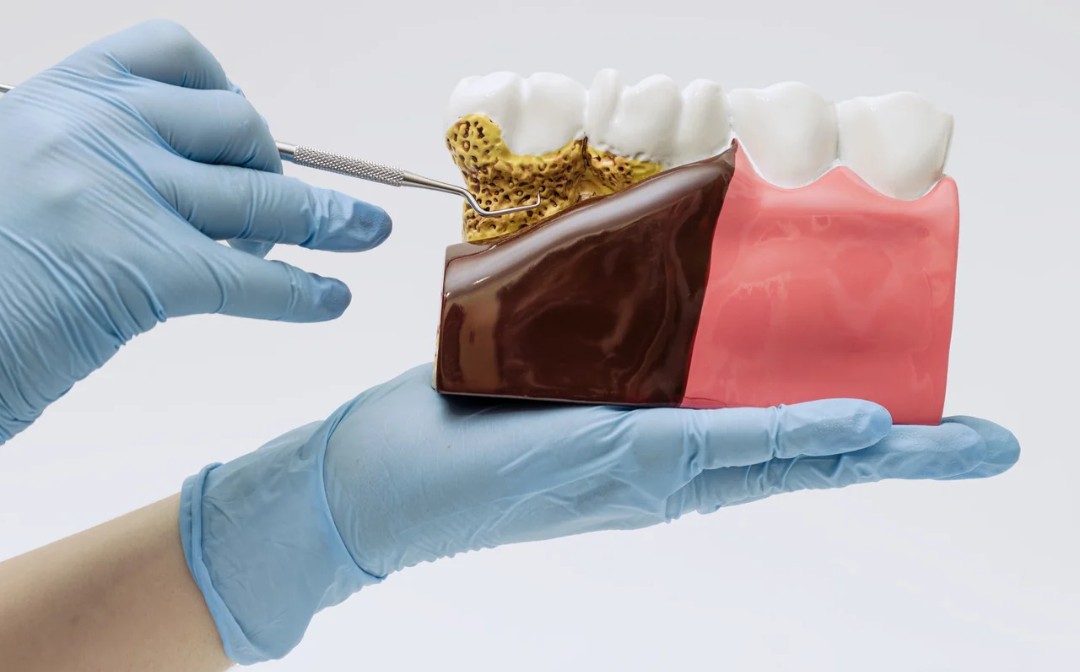
Calculus, commonly called tartar, develops when plaque isn’t removed and becomes hardened by minerals in your saliva.
Unlike soft plaque, calculus bonds firmly to your teeth and can’t be removed with regular brushing or flossing. It often develops along the gumline and behind your lower front teeth.
Its rough surface makes it easier for additional plaque to accumulate, increasing your risk of gum inflammation and periodontal disease. Removing calculus requires professional dental cleaning.
How Can You Prevent Plaque, Biofilm, and Calculus Buildup?
Keeping harmful oral bacteria under control isn’t complicated. Brushing twice daily with fluoride toothpaste, flossing every day, and limiting sugary snacks and drinks can help.
Regular dental cleanings are also important because your hygienist can remove hardened calculus and buildup you can’t reach at home. With consistent daily care and regular visits to your dentist, you can help prevent bacterial buildup from turning into more serious oral health problems over time.