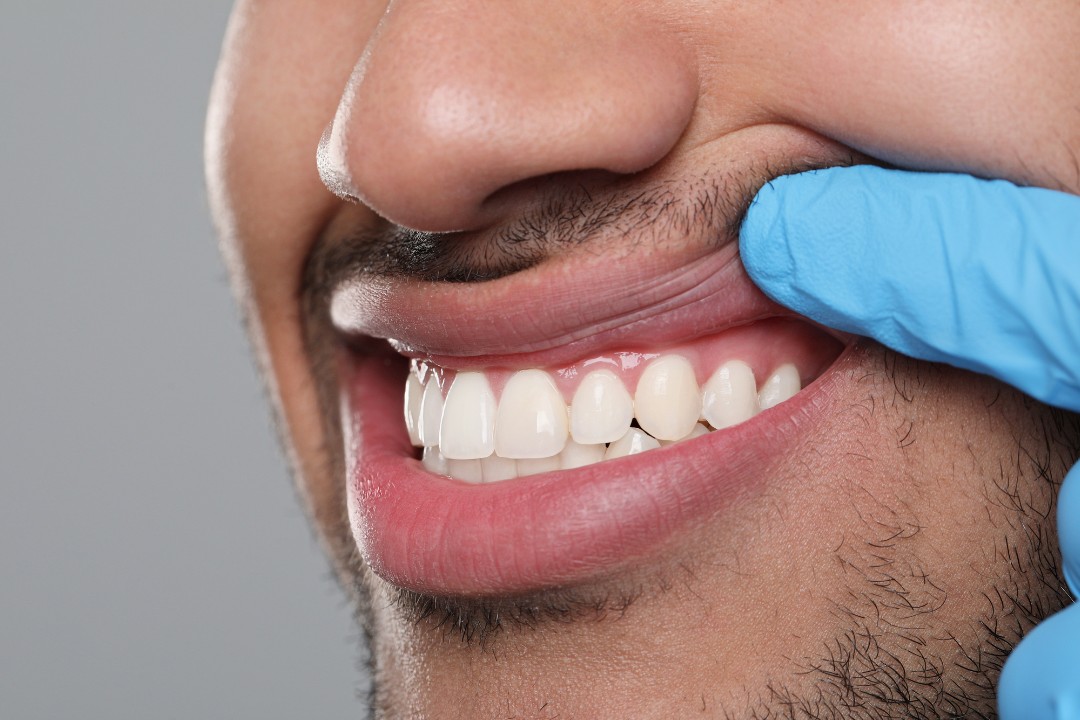
Gum recession is one of those dental concerns that can sneak up on you. It often starts gradually, when you notice that certain teeth look slightly longer than before or you’re suddenly experiencing cold or heat sensitivity. When the gum tissue pulls away from your teeth, the roots become exposed, increasing the risk of sensitivity, decay, and even tooth loss if left untreated. In this blog, we’ll go over some of the causes of receding gums so you can be aware and take steps to protect your smile before the problem progresses.
Gum Disease
One of the most common causes of gum recession is periodontal disease, more commonly known as gum disease. Gum disease is actually a bacterial infection that starts when plaque and tartar build up along your gumline, causing inflammation that damages soft tissues supporting your teeth. Left untreated, your gums may eventually pull away from your teeth, creating pockets where bacteria can thrive. Professional periodontal treatment is essential to stop the infection and prevent further gum recession.
Brushing Too Aggressively
While good oral hygiene is important, there IS actually a wrong way to care for your teeth. Brushing too hard or using a toothbrush with hard or stiff bristles can gradually wear away your gum tissue, often leading to recession. Gently brushing in circular motions using a soft-bristled toothbrush removes plaque effectively while protecting your gums from unnecessary damage.
Teeth Grinding and Clenching
Grinding or clenching your teeth places excessive pressure on your gums and supporting structures. Over time, this repeated stress can contribute to gum recession, especially when combined with gum disease. A custom nightguard can help protect your teeth and gums from damage due to nighttime grinding.
Misaligned Teeth
Crooked teeth or an uneven bite can result in excessive force being placed on certain teeth when you chew, eventually contributing to gum recession. Undergoing orthodontic treatment to improve your bite alignment can help reduce uneven stress on your gums.
How Can Receding Gums Be Treated or Prevented?
Treatment for gum recession depends on the cause and severity of the problem. If caught early, treatment may include professional cleanings, improved oral hygiene habits, periodontal therapy, or a custom nightguard. More advanced cases of recession may require gum grafting to replace lost tissue and protect exposed tooth roots.
Protect Your Gums With Regular Dental Checkups
Preventing gum recession begins with good oral hygiene, regular dental checkups, and proper brushing techniques. Addressing problems early can help preserve your gum tissue, keeping your smile bright and healthy for as long as possible.