For most people, the primary reason they choose to undergo orthodontic treatment is to straighten crooked teeth and improve their smile. But did you know that the position of your teeth and the way your bite fits together can also affect how you speak? Your teeth, tongue, lips, and jaw all work together to ensure that you speak clearly, so when your bite is out of alignment, certain sounds can become harder to pronounce.
How Does Your Tooth Alignment Affect Your Speech?
When you speak, your tongue moves against your teeth and the roof of your mouth to form different sounds. If your teeth are crowded, spaced too far apart, or positioned incorrectly, your tongue may struggle to make the precise movements needed for clear pronunciation.
For example, making sounds like “s,” “z,” “th,” and “t” depends on proper tongue placement and airflow. If your teeth are misaligned, they can sometimes interfere with these movements, contributing to lisps, whistling sounds, or difficulty pronouncing certain words.
The Connection Between Bite Problems and Speech
Your bite (or the way your upper and lower teeth come together) also plays an important role in speech. Certain bite problems can make it harder to control airflow or position your tongue correctly.
Common orthodontic issues that may affect your speech include:
- Open bite: When your front teeth don’t touch, air can escape when you speak, sometimes causing a lisp.
- Overbite: If your upper front teeth overlap or protrude too much, it may interfere with certain tongue and lip movements.
- Underbite: If your lower teeth extend in front of your upper teeth, some sounds may be more difficult to make.
- Crowded or widely spaced teeth: Irregular tooth positioning can affect your tongue placement and airflow.
Can Braces or Invisalign® Improve Your Speech?
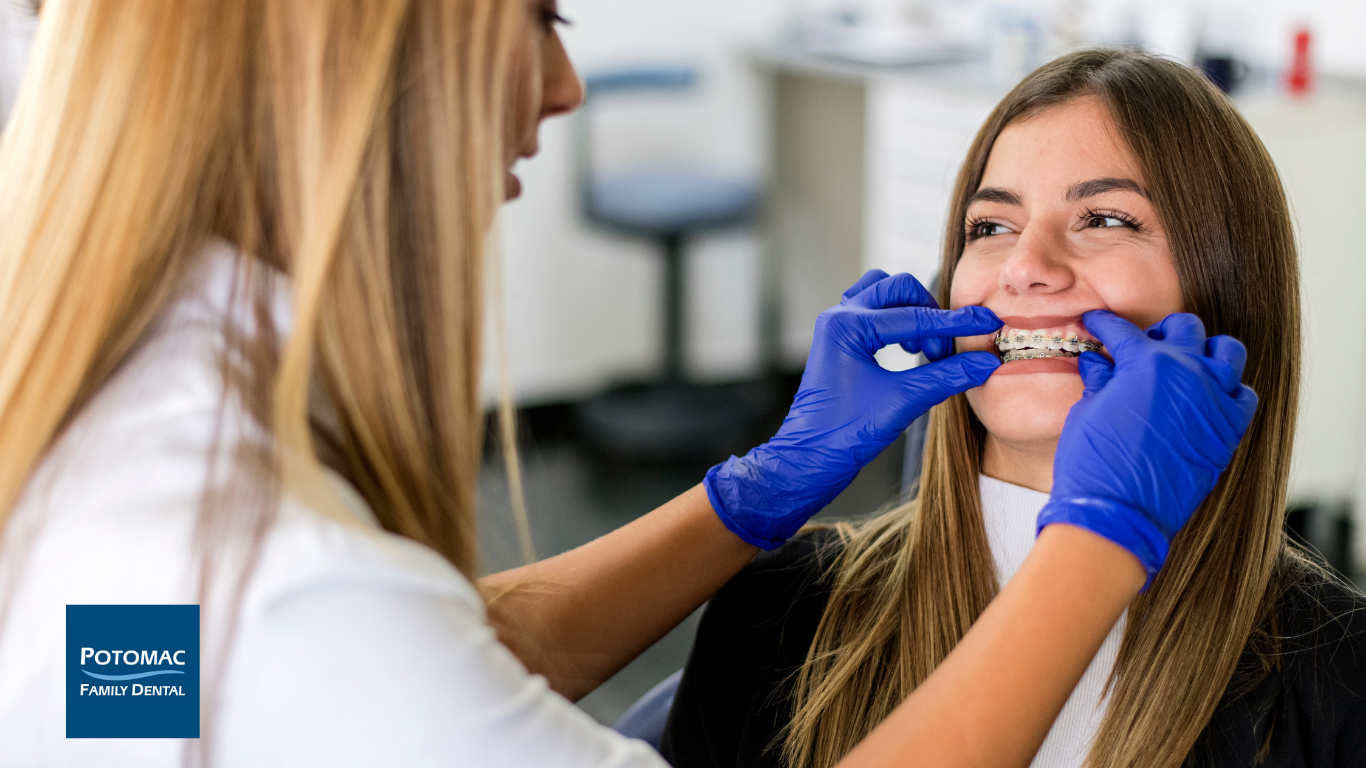
Orthodontic options, such as traditional braces and Invisalign®, gradually reposition your teeth and correct bite problems. As your teeth move into better alignment, your tongue may have an easier time forming certain sounds.
However, orthodontic treatment doesn’t automatically correct every speech issue. Some patients may also benefit from speech therapy to address established pronunciation habits or other speech difficulties.
Improve More Than Just Your Smile
If you or your child have trouble with certain speech sounds, your dentist can evaluate whether tooth alignment or bite problems are contributing factors. Addressing these issues with orthodontics may improve your speech clarity, chewing function, oral health, and confidence.